There’s a certain magic in opening a bottle of wine, the anticipation building with each step towards that first perfect sip. Yet, a challenging cork can quickly turn that joy into frustration. For over a decade, I’ve navigated the intricate world of wine openers, from the simplest corkscrews to the most advanced lever systems, always seeking the ideal tool for that seamless uncorking experience. My journey has led me to appreciate innovative designs that prioritize ease and reliability, particularly those pioneered by the iconic ScrewPull brand. Let’s delve into the fascinating history, diverse types, and essential considerations for choosing a wine opener that perfectly complements your love for wine.
What is a Wine Opener? Why Do You Need One?
At its core, a wine opener is a specialized tool designed to extract corks from wine bottles, a task that would be nearly impossible by hand due to the cork’s smooth surface and tight seal. Beyond simple utility, a quality wine opener ensures the cork is removed cleanly and efficiently, preventing breakage that can spoil your wine with unwanted bits or, worse, make the bottle entirely inaccessible.
The history of the corkscrew is surprisingly rich, with its origins potentially stemming from the “gun worm”—a spiral tool used by soldiers in the 17th century to remove misfired charges from muskets. As wine became more widely bottled and aged with corks, especially in England, the need for a dedicated cork-pulling device grew. Early designs were simple helical screws, but innovators soon sought to improve leverage and ease of use. A reliable wine opener isn’t just a convenience; it’s an essential piece of equipment for any wine enthusiast, ensuring every bottle opens smoothly and preserves the integrity of your cherished wine.
Popular Wine Opener Types on the Market
The world of wine openers offers a spectrum of designs, each with unique benefits and drawbacks. Understanding these variations is key to finding your perfect match.
ScrewPull-Style Wine Opener (Twist-Style)
The original ScrewPull concept revolutionized wine opening with its elegant simplicity. This twist-style opener rests directly on the bottle neck, and as you twist the handle, a specially designed worm effortlessly penetrates the cork, simultaneously pulling it upward. Herbert Allen, the visionary engineer behind the 1979 invention of the ScrewPull, aimed to make wine opening “fool-proof.” The key innovation was often a Teflon-coated worm, which significantly reduced friction, allowing for smooth, intact cork removal.
- Advantages: This style is remarkably easy on the hands and wrists, making it a comfortable choice for many users. The design ensures the worm centers well into the cork, leading to fewer cork breakages.
- Disadvantages: While generally effective, some models might still require a degree of finger strength for twisting. These openers are typically larger than more compact styles, and some early plastic versions, despite their lasting power, could feel less substantial.
- How to Use: Place the opener firmly over the bottle neck, ensuring the worm is centered. Twist the handle clockwise continuously until the cork glides out. To release the cork, twist the handle counter-clockwise.
|
Our Picks for the Best Wine Opener in 2026
We may earn a commission when you use one of our links to make a purchase.
|
||
| Num | Product | Action |
|---|---|---|
| 1 | Wino Wine Key! - Professional Sommelier's Corkscrew Wine Opener |

|
| 2 | GORILLA GRIP BPA-Free Premium Wine Opener, Heavy Duty Zinc Alloy Wing Corkscrew, Multifunctional Bottle Openers Remove Corks, Caps, Easy Use Sharp Cork Screw, Dishwasher Safe, Holiday Essential, Black |
|
| 3 | Secura Electric Wine Opener, Automatic Electric Wine Bottle Corkscrew Opener with Foil Cutter, Rechargeable (Stainless Steel) |
|
| 4 | Oster Cordless Electric Wine Bottle Opener with Foil Cutter, Silver |
|
| 5 | OXO SteeL Winged Corkscrew with Removable Foil Cutter |
|
| 6 | Cap Opener, Fun Bottle Opener for Parties and Gatherings, Creative Design Launches Caps at BBQs, Portable Entertainment for Outdoor Activities, Available in Red, Black, Blue |
|
| 7 | Beneno Wine Opener, Zinc Alloy Premium Wing Corkscrew with Multifunctional Bottles Opener, Sharp Wine Corkscrew with Ergonomic Non-Slip Wing Handle, Silver |
|
| 8 | KORCCI Wine Opener, Heavy-Duty Zinc Alloy Wing Corkscrew, Premium Beer Bottle Opener, Multifunctional Wine Accessories with Ergonomic Handle and Sharp Screw, for Kitchen, Bar, Restaurant, Bartenders |
|
| 9 | Cuisinart CWO-25 Electric Wine Opener, Stainless Steel 3.50" x 4.75" x 10.00" |
|
| 10 | OXO Steel Vertical Lever Corkscrew with Removable Foil Cutter |
|
Lever Wine Opener (Often ScrewPull Lever Model / Rabbit-Style)
Taking the principle of effortless extraction further, lever wine openers, often exemplified by the popular “Rabbit” style or Le Creuset’s Leverpull (which inherited the ScrewPull lineage), offer maximum leverage. These robust devices clamp securely onto the bottle, and with a simple down-and-up motion of a lever, the cork is extracted in seconds.
- Advantages: Lever openers require minimal physical effort, making them ideal for individuals with limited hand strength or arthritis. They are incredibly fast and can make opening multiple bottles a breeze.
- Disadvantages: Their bulky size can make storage challenging. Some users find there’s a slight learning curve to master the clamping and levering action, and they can be more expensive than simpler designs. Occasionally, they might struggle with extremely tight or fragile corks, and many sommeliers prefer more traditional tools for their precision.
- How to Use: First, use the integrated foil cutter (if available) to remove the bottle’s foil. Clamp the opener firmly onto the bottle neck with the lever in the upward position. Push the lever down to insert the worm into the cork, then pull the lever back up to extract the cork. A similar motion is often used to release the cork from the opener.
Electric Wine Opener
For ultimate convenience, electric wine openers automate the entire process. These battery-powered devices engage the cork, screw in, and extract it with the push of a button, removing all manual effort.
- Advantages: They offer zero physical exertion and are incredibly fast, often uncorking a bottle in mere seconds. Many models come with an integrated foil cutter, adding to their all-in-one appeal.
- Disadvantages: Electric openers can be noticeably noisy during operation. They require regular charging and tend to be larger, consuming more counter or drawer space. The initial cost can also be higher than manual options.
- How to Use: After removing the foil, place the electric opener firmly on top of the bottle, ensuring the worm is centered. Press the “down” button to insert the worm and extract the cork. Once the cork is out, press the “up” button to release the cork from the opener.
Waiter’s Corkscrew (Sommelier Knife)
The waiter’s corkscrew, also known as a sommelier knife or wine key, is a staple in professional settings and a favorite among those who value precision and portability. Its foldable, compact design typically includes a spiral worm, a hinged lever (often with two steps for added leverage), and a small blade for cutting foil.
- Advantages: This tool is highly portable, fitting easily into a pocket, and is very affordable. With practice, it allows for incredible control over cork extraction, making it the preferred choice for sommeliers and experienced wine enthusiasts.
- Disadvantages: Mastering the waiter’s corkscrew requires practice, dexterity, and a degree of hand strength. New users may find it challenging to use smoothly without tearing corks.
- How to Use: Use the small blade to cut and remove the foil around the bottle’s lip. Twist the worm into the center of the cork until only one curl remains visible. Place the first “step” of the hinged lever onto the bottle’s lip and gently pull the handle upward to begin extracting the cork. Once lifted halfway, switch to the second step (if available) for further leverage, then remove the cork completely.
Winged Corkscrew
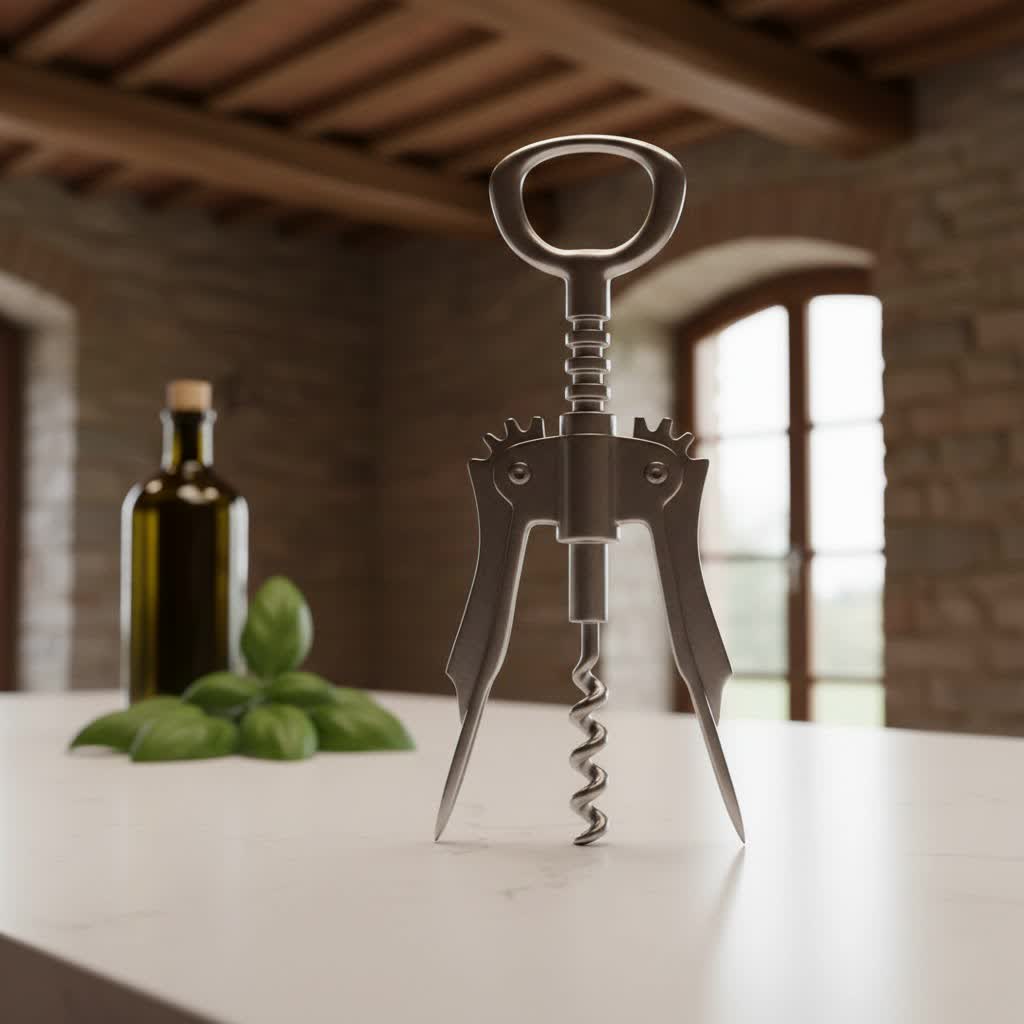
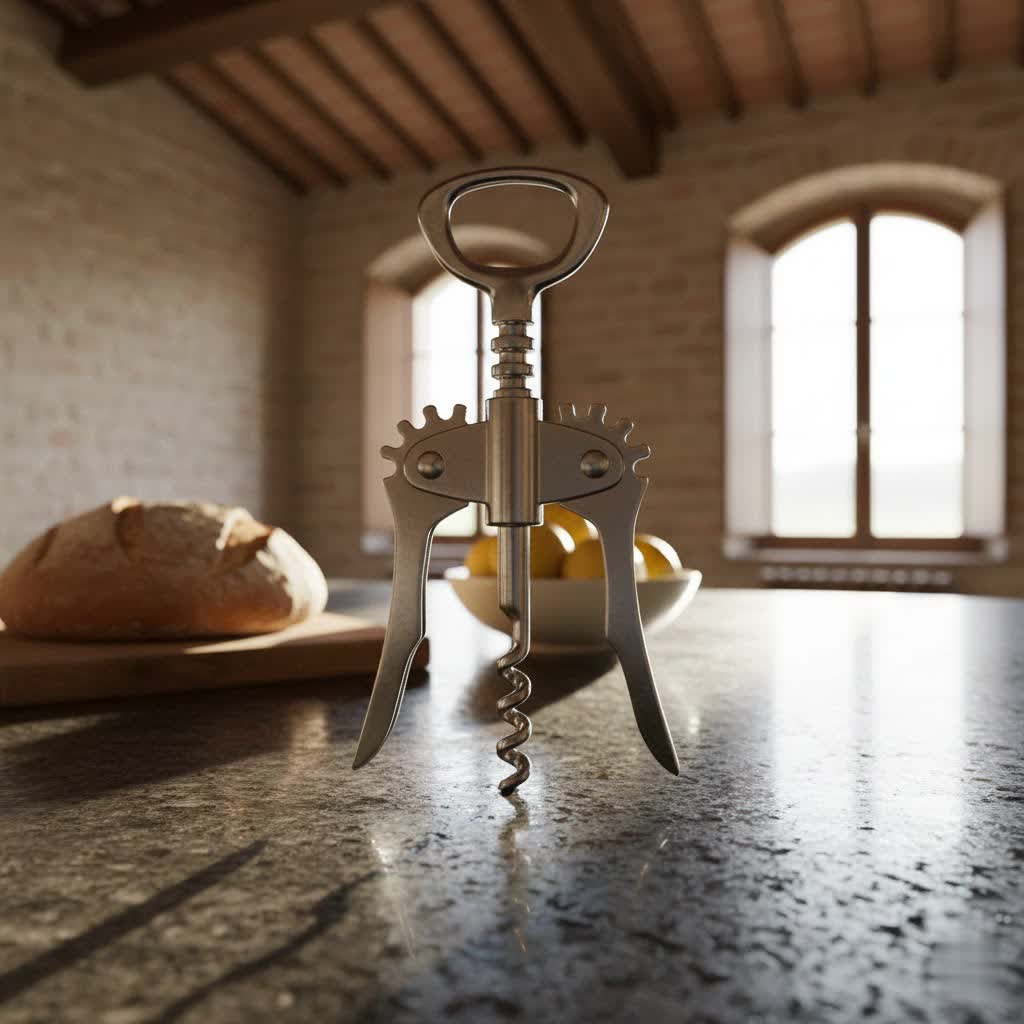
The winged corkscrew is a common sight in many home kitchens, recognizable by its two “wings” that rise as the central worm is screwed into the cork. Once the wings are fully extended, you push them down to lever the cork out of the bottle.
- Advantages: This style is visually intuitive and relatively easy to use, utilizing simple leverage to assist in cork removal. It’s often an affordable and accessible option for casual home use.
- Disadvantages: Winged corkscrews can sometimes lack the necessary torque for very stubborn or tightly sealed corks, leading to frustration. They are generally bulkier than waiter’s corkscrews and are not typically favored by wine professionals.
- How to Use: Place the opener over the bottle, ensuring the worm is centered on the cork. Twist the top handle clockwise to drive the worm into the cork; as you twist, the two “wings” will rise. Once the worm is fully inserted and the wings are fully raised, firmly push both wings down simultaneously to extract the cork.
Two-Pronged Cork Puller (Ah-So)
The two-pronged cork puller, often called an “Ah-So” (from the German “ach so!” meaning “Now I understand!”), is a specialist tool primarily for older or more delicate wines. It features two thin metal prongs that slide between the cork and the bottle neck, extracting the cork without piercing it.
- Advantages: This unique design allows for the removal of fragile or crumbly corks without damaging them, making it invaluable for wine collectors who wish to preserve the cork’s integrity. It’s excellent for preventing cork bits from falling into the wine.
- Disadvantages: The Ah-So has a significant learning curve and requires a delicate touch. It is not designed for everyday use and typically does not include a foil cutter.
- How to Use: Gently insert the longer prong between the cork and the bottle neck on one side, then slide the shorter prong down the opposite side. Once both prongs are fully inserted, twist and pull upward simultaneously to carefully extract the cork.
Comparison Table of Wine Opener Types
Choosing the right wine opener often comes down to balancing ease of use, durability, and your specific wine-opening habits. Here’s a quick comparison to help you weigh your options:
| Type of Wine Opener | Advantages | Disadvantages | Price Range (Estimate) | Overall Rating |
|---|---|---|---|---|
| ScrewPull (Twist-Style) | Easy on wrists, simple, effective, good for intact corks. | Can require finger strength, larger, some plastic models feel flimsy. | $15 – $40 | Good |
| Lever (Rabbit/ScrewPull) | Minimal effort, fast, ideal for limited hand strength. | Bulky, expensive, learning curve, may struggle with very tight/poor corks. | $30 – $100+ | Very Good |
| Electric | Effortless, quick, often includes foil cutter. | Noisy, requires charging, bulkier, can be pricey. | $25 – $150 | Good (for convenience) |
| Waiter’s Corkscrew | Compact, portable, precise, professional, affordable. | Requires dexterity and hand strength, learning curve. | $5 – $50+ | Excellent |
| Winged Corkscrew | Intuitive, good leverage, common household item. | Can lack torque for tough corks, not portable, not professional. | $10 – $30 | Fair to Good |
| Two-Pronged (Ah-So) | Preserves old/fragile corks, no piercing. | High learning curve, not for everyday use, no foil cutter. | $20 – $70 | Niche/Specialty |
Factors to Consider When Buying a Wine Opener (Buying Guide)
Selecting the perfect wine opener involves more than just picking a design. Thoughtful consideration of materials, ease of use, durability, and brand reputation will ensure you make a wise investment for your wine journey.
Material and Durability
The longevity and performance of your wine opener largely depend on its construction materials. Stainless steel and chrome are popular choices for their durability and resistance to rust, promising years of reliable service. While some ScrewPull models famously use plastic, particularly for the worm, these are often high-grade plastics and, in the case of the original ScrewPull, are often Teflon-coated to ensure smooth and lasting performance. When inspecting a wine opener, pay attention to the sturdiness of the handle, the sharpness and coating of the worm, and the overall feel of the mechanism. Quality craftsmanship signals a durable tool.
Ease of Use
Your personal comfort and strength should guide your choice. If you prioritize minimal physical effort, an electric opener or a lever-style model (like many ScrewPull lever models) will be your best bet. These designs take the guesswork and strain out of cork removal. For those who enjoy a more hands-on approach and value precision and portability, the waiter’s corkscrew offers excellent control once you’ve mastered its technique. Consider any physical ailments, such as arthritis, which might make a power-assisted opener a more suitable choice.
Price and Value
Wine openers are available across a wide price spectrum, from budget-friendly winged corkscrews to high-end electric or lever models. While it’s tempting to opt for the cheapest option, remember that value often correlates with durability and consistent performance. An inexpensive opener that breaks or consistently damages corks will cost you more in the long run, both in frustration and potentially wasted wine. Investing in a mid-range or premium opener from a reputable brand can provide a more reliable and enjoyable experience over many years.
Brand Reputation
The brand behind your wine opener can offer significant assurance of quality. Companies like Le Creuset (the parent company of ScrewPull), Rabbit, OXO, and Pulltaps have established reputations for producing reliable and well-designed wine tools. Opting for a product from a trusted brand often means benefiting from better materials, superior engineering, and sometimes, more comprehensive warranties. A strong brand reputation often reflects consistent performance and customer satisfaction.
Integrated Features (Foil Cutter)
Many modern wine openers, especially electric and some lever-style models, come with integrated or accompanying foil cutters. This feature adds a layer of convenience, eliminating the need for a separate tool or struggling with a knife to remove the foil cap. While a sharp, effective foil cutter is a definite plus, some high-quality manual openers, like certain waiter’s corkscrews, incorporate an excellent blade for this purpose, maintaining their all-in-one functionality.
Top 3 ScrewPull Wine Openers and Related Picks
While “ScrewPull” often refers to the specific original twist-style invented by Herbert Allen, its legacy extends to the broader category of easy-to-use wine openers, particularly lever models. Here are some top picks that embody the ScrewPull spirit of effortless uncorking.
-
Le Creuset Screwpull (Original Twist Model / Table Model Corkscrew)
Embodying Herbert Allen’s original vision, the classic Le Creuset ScrewPull twist-style opener simplifies the process. Its elegant design often features a robust plastic body paired with the signature Teflon-coated worm, ensuring minimal friction and smooth cork entry. This type is known for its durability, with many users reporting years of reliable service despite its seemingly simple construction. It’s an iconic piece, celebrated for its effectiveness and straightforward operation.- Pros: Straightforward and effective for daily use, delivers smooth cork extraction, classic design.
- Cons: Some models can feel lightweight due to plastic construction, can be considered pricey for a manual twist-style opener.
-
Rabbit Original Lever Corkscrew Wine Opener
The Rabbit lever corkscrew quickly became a benchmark for “Screwpull-style” ease in the lever category. With an ergonomic grip and a powerful lever mechanism, it promises to pull any cork—natural or synthetic—in just about three seconds with minimal effort. Newer iterations often boast an integrated foil cutter, enhancing its convenience and making it a comprehensive tool for wine lovers.- Pros: Ergonomically designed for comfortable use, extracts corks swiftly and efficiently with almost no effort, includes (or can include) a foil cutter.
- Cons: Its size makes it less portable and can be considered bulky for storage.
-
OXO Vertical Corkscrew with Removable Foil Cutter
This lever-style opener from OXO provides another excellent example of the ScrewPull’s commitment to user-friendly design. It securely clasps the wine bottle, and once you get the hang of its lever action, it provides a smooth and efficient cork extraction. It’s designed to be kind to your wrists, making it a comfortable option for regular use.- Pros: Offers a secure grip on the bottle, provides good leverage for easy cork removal, generally ergonomic.
- Cons: It can be quite heavy and bulky, and some users note a slight learning curve to maximize its efficiency.
Tips for Using and Maintaining Your Wine Opener
Even the best wine opener benefits from proper technique and regular care. Adhering to these tips will ensure longevity for your tool and a flawless experience with every bottle.
Proper Usage Techniques
The secret to a successful uncorking lies in precision and steady handling, regardless of the opener type.
- Foil Removal First: Always start by cleanly removing the foil seal. Use a sharp foil cutter, the blade on a waiter’s corkscrew, or even a small knife to cut around the lip of the bottle. A clean cut prevents foil bits from falling into your wine.
- Center the Worm: For all corkscrew types, ensure the worm (the spiral part) is aimed directly at the center of the cork before you begin to twist or engage the lever. This prevents the cork from tearing or breaking apart.
- Apply Even Pressure: When twisting a ScrewPull-style or winged corkscrew, apply steady, even downward pressure as you turn. Avoid aggressive yanking. For lever and electric models, ensure the opener is firmly seated on the bottle before engaging the mechanism.
- Smooth Extraction: With lever and electric openers, allow the mechanism to perform the work smoothly. For manual corkscrews, use a gentle, upward motion to ease the cork out once the worm is fully inserted. Avoid sudden, forceful pulls that can damage the cork or splash wine.
Cleaning and Storage
Taking a few moments to clean and properly store your wine opener will extend its life and maintain its performance.
- Wipe Down After Each Use: After opening a bottle, use a damp cloth to wipe down the worm and any parts that contacted the cork or wine. This removes sticky residue that can build up and affect future operations.
- Follow Manufacturer Instructions: For electric wine openers, consult the user manual for specific cleaning guidelines, especially concerning electronic components and charging bases.
- Dry Thoroughly: Ensure all parts are completely dry before storage to prevent rust on metal components.
- Store Properly: Keep your wine opener in a dry place, ideally in a drawer or its designated storage case, to protect it from dust and damage. If your opener has a sharp foil cutter or worm, ensure it is stored safely to prevent accidental injury.
The satisfaction of effortlessly uncorking a bottle of wine is a simple pleasure that every enthusiast deserves. With the right Screwpull Wine Opener as your companion, you’re not just opening a bottle; you’re unlocking an experience.
Frequently Asked Questions
What makes a ScrewPull wine opener different from other corkscrews?
ScrewPull wine openers, especially the original twist and modern lever models, are renowned for their user-friendly design. They often feature a non-stick or Teflon-coated worm for smooth cork penetration, making extraction effortless with minimal physical effort. This focus on ease and reliability sets them apart from traditional, more labor-intensive corkscrews.
Can ScrewPull openers handle synthetic corks?
Yes, most modern ScrewPull-style wine openers, including lever and electric models, are designed to handle both natural and synthetic corks effectively. The specialized coating on the worm, a hallmark of many ScrewPull designs, aids in smooth insertion and removal across various cork materials.
How often should I replace my ScrewPull wine opener’s worm?
The lifespan of a corkscrew worm largely depends on your frequency of use and the types of corks you encounter. While ScrewPull worms are engineered for durability, if you notice increased difficulty penetrating corks, or if corks start to break more often, it may be an indication that the worm is dull or worn. Some lever models offer replaceable worms to extend the life of the opener.
Are ScrewPull wine openers suitable for older wines with fragile corks?
While lever and twist-style ScrewPull openers are generally reliable for most bottles, for very old wines with potentially fragile or crumbly corks, a two-pronged cork puller (Ah-So) is often recommended. This specialty tool extracts the cork without piercing it, significantly reducing the risk of breakage and preserving the cork’s integrity.
What’s the best way to clean my ScrewPull wine opener?
For most manual ScrewPull wine openers, a simple wipe with a damp cloth after each use is sufficient to remove any wine residue or cork dust. For electric models, always consult the manufacturer’s instructions for specific cleaning guidelines, especially to ensure no moisture damages the electronic components. Regular cleaning helps maintain performance and prolongs the life of your opener.